A direct link avoids ambiguity
When the intended upload is already open elsewhere, its URL identifies it more precisely than another broad title search. Use keywords when discovery is still part of the task.

YouTube to MP3 keeps the focus on listening. Paste a video's link when you already know the recording, or search for it in the form above. Confirm the source, open the available audio choices, and download the option that fits your task. The useful result is a recognizable MP3 of the right recording, not simply another file in Downloads.
The local chart is temporarily unavailable. Search for a title or artist above.


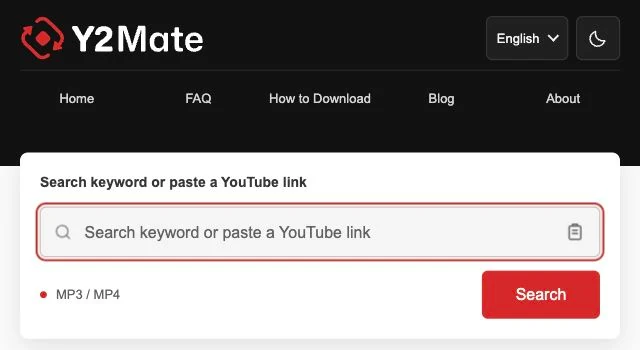
Copy the video's complete YouTube URL or search using a title and creator. Check that the result identifies the recording you actually want to hear.
Open its conversion page and inspect the formats provided for that video. Choose an available MP3 option without assuming every source offers identical settings.
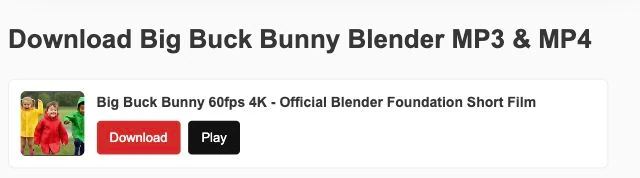
Follow the selected download control and wait for completion. Play the file, check its duration, and listen to a later passage as well as its introduction.
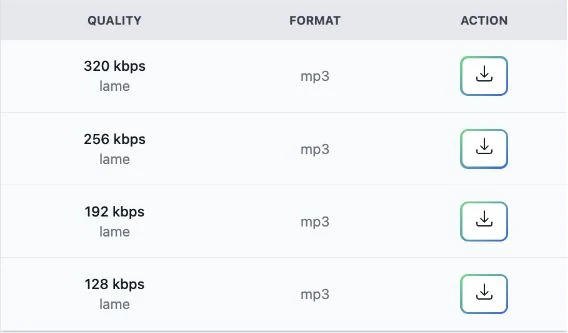
When the intended upload is already open elsewhere, its URL identifies it more precisely than another broad title search. Use keywords when discovery is still part of the task.
The conversion result belongs to the video you selected. Keep its identity in view while choosing a file so a familiar title does not disguise a different performance.
The browser manages the transfer. Its download list provides the practical next step for checking progress, opening the file, and finding where it was saved.
An MP3 download reflects the available source audio. Background noise, an incomplete performance, or a weak microphone recording cannot be repaired merely by choosing a larger output. Listen to a representative part of the source and decide whether it meets your needs before investing time in several quality comparisons.
A conversation, an owned rehearsal, or a lecture with a complete spoken explanation can be useful as sound alone. Instructions that depend on diagrams, visible captions, or a physical demonstration may need video. Make that decision before converting, especially when you will listen somewhere you cannot refer back to the screen.
Translated titles and captions can help you understand a video, but they do not automatically become another soundtrack. If a source has several audio tracks, inspect the actual download result rather than assuming it inherits your YouTube player settings. This page does not promise a caption-to-speech or language-selection feature.
After checking playback, retain a descriptive name and leave the MP3 extension intact. A downloaded file is separate from adding it to a music library or transferring it to another device. Use audio you own or have permission to save, and treat unavailable or restricted sources as limits rather than invitations to bypass access controls.
Paste a complete YouTube video link, select Convert, and inspect the available audio options for the matching result.
Yes. Enter a title, artist, or keyword. The form shows Search until you enter a recognized YouTube URL.
No. MP3 is an audio format. Choose a suitable offered video option when the picture carries information you need.
Not automatically. Caption text and spoken audio are separate. An audio conversion is not a text-to-speech operation.
Do not assume so. Inspect the choices actually supplied for the selected video and provider rather than relying on a universal setting.
A timestamp can tell a player where to start without defining an edited excerpt. The available download may still cover the full video.
Check the browser's download status, then open the saved file and verify its duration and playback. A result preview is not the completed file.
Source availability, provider support, and permission all matter. Use material you may save and do not attempt to bypass restrictions.