Why a Timestamp Link Can Still Download the Full Video
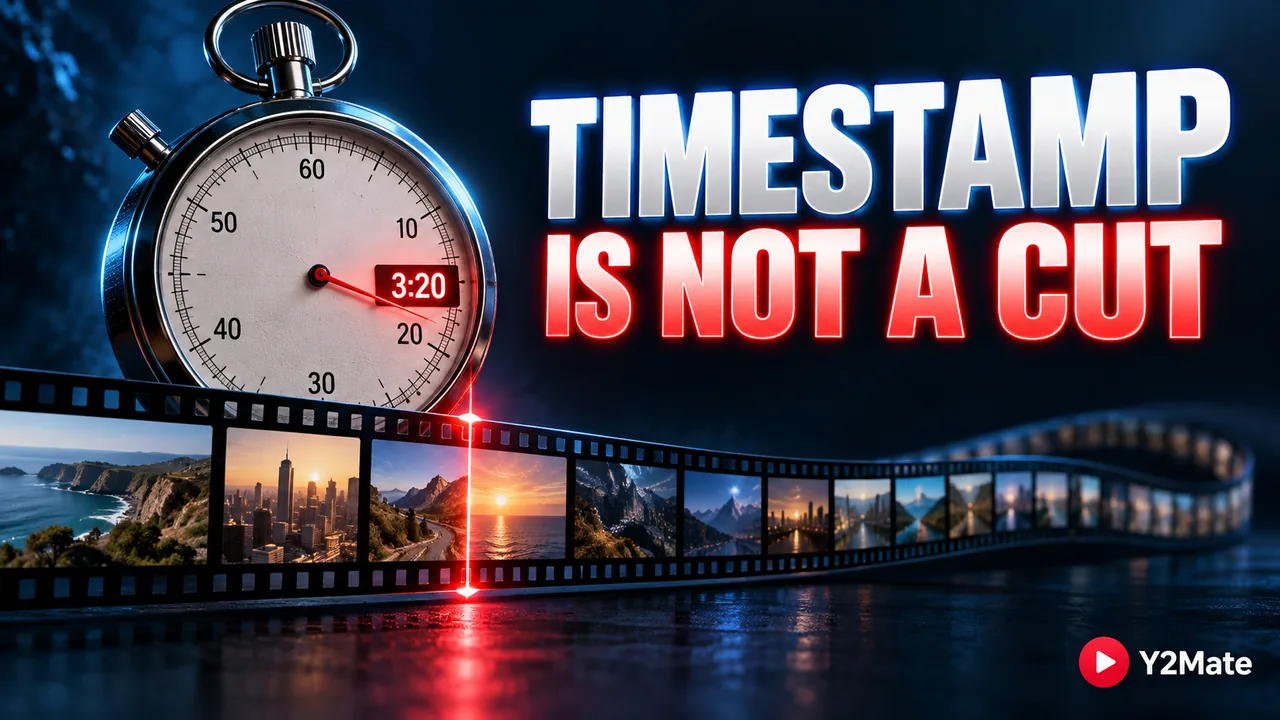
A YouTube link that opens at 3:20 usually still points to the same complete video. The timestamp tells a supported player where to begin playback; it does not necessarily describe a new, shorter file. If you paste that address into Y2Mate, do not assume the downloaded audio or video will start at that exact moment.
This distinction is useful when someone shares a particular answer in an interview or one demonstration in a long lesson. The link makes the relevant moment easier to find, but an excerpt and a playback shortcut are different things. Check the duration shown in the result before choosing a download.
What the timestamp changes
Imagine a twelve-minute presentation with a useful explanation beginning at three minutes and twenty seconds. A timestamped link can open the YouTube player at that point. You can usually move the playhead backward and watch the earlier introduction because the player still has access to the whole presentation.
The video identity remains the important part of the address. Additional information can tell a compatible player where to start, but another service may use only the identity when locating the source. Recognizing a timestamp is not the same as implementing a trim operation or promising that an exported file follows it.
YouTube's current sharing experience uses Share at Timestamp language. Older instructions about creating public Clips may no longer match the interface. Regardless of the label, look at what the control actually does: opening a moment, defining an excerpt, and saving a separate file are not interchangeable actions.
Check the result before pressing Download
When a source resolves, compare its displayed title and duration with the original video. If the twelve-minute presentation still appears as twelve minutes, that is a strong practical reason not to expect a two-minute excerpt. A thumbnail from the requested moment would not prove that the output is trimmed either.
- Open the shared address and confirm which video it identifies.
- Note the desired start point and, if relevant, the end point separately.
- Submit the source through the supported download form.
- Read the available format and duration information.
- After saving an authorized file, inspect its beginning and total length.
If the address fails entirely, use the steps for checking an invalid YouTube link. Avoid guessing at random edits to a long URL. A copied address can include accidental punctuation or unrelated text, and those problems should be separated from the question of whether trimming is supported.
Why repeating the same link may not help
A full-length result is not automatically a malfunction. The download workflow may simply process the complete source while ignoring playback-only instructions. Repeating the same request several times can produce the same duration without changing anything about how the provider handles timestamps.
Nor does a start time specify an end time. If someone shares a moment at 3:20, they may intend you to watch the next sentence, the rest of the chapter, or the rest of the video. Software cannot reliably infer which of those boundaries you want. A real excerpt needs an explicit editing decision, including enough context to avoid cutting a sentence in half.
Chapters create another common misunderstanding. A named section can help you navigate to a moment, but it does not necessarily correspond to an independent downloadable asset. Read about chapters and separate audio files if your goal is to keep several sections of one recording.
Make an excerpt as a separate, authorized task
For a recording you own or have permission to edit, a separate local editor may be the appropriate place to create an excerpt. Keep an untouched original, work on a copy, and choose both boundaries deliberately. Leave a short margin when a speaker breathes or when a musical phrase continues beyond the visible chapter marker.
Preview the retained section before saving it. Then open the newly saved file, rather than relying only on the editor's timeline, and confirm its duration and first and last moments. Some editing tools save projects separately from playable exports, so a successful project save does not always mean you have created a finished media file.
On a Mac, the instructions for trimming a copy in QuickTime explain one possible video-editing route and its format limitations. That is a separate application workflow, not a claim that Y2Mate provides a timestamp-based trimming feature.
Keep the source reference with your excerpt
A useful filename can identify the subject and the selected portion, while a note records where it came from and why you may use it. Do not imply that a shortened answer represents an entire discussion when surrounding context changes its meaning. Downloading permission and permission to republish an edited excerpt can also be different matters.
The simplest expectation is the most reliable: use a timestamp to find a moment, inspect the download options to learn what file is offered, and use a suitable editor when an authorized shorter file is actually required. Those three steps solve different problems without asking one link to do all of them.