Trim an MP3 Copy in Audacity and Keep the Original
Sometimes you need one explanation from a long recording rather than the entire audio file. A short excerpt can be easier to find, rehearse, or review, but a rushed cut can remove the beginning of a word or leave an abrupt ending. After obtaining an authorized MP3 through Y2Mate, make a working copy and plan the excerpt before editing. The aim is a useful piece of audio, not simply the smallest file.
Audacity provides the local editing workspace for this task. It is separate from downloading or conversion, and these steps do not imply that Y2Mate includes a built-in audio editor. Work only with audio you are entitled to modify and keep the untouched original available throughout the process.
Decide what the excerpt needs to include
Listen once and write down rough start and end times. For spoken material, include enough context for the excerpt to make sense without the preceding conversation. A sentence beginning with “that is why” may be technically complete but confusing when separated from what came before it. For music you may edit, allow room for a natural beginning and ending rather than cutting solely at a convenient minute mark.
Think about the intended use. A language-practice clip may need a pause before the phrase; a personal rehearsal reference may need a count-in. These are editorial decisions, not quality settings. If your starting point was a timestamped source link, remember that a playback timestamp does not necessarily create a short downloaded file.
Give the original and working copy distinguishable names. Keep both in a project folder with your time notes. This makes it easier to return to the complete recording if a later listen shows that the excerpt is missing something important.
Import one copy and select the region to keep
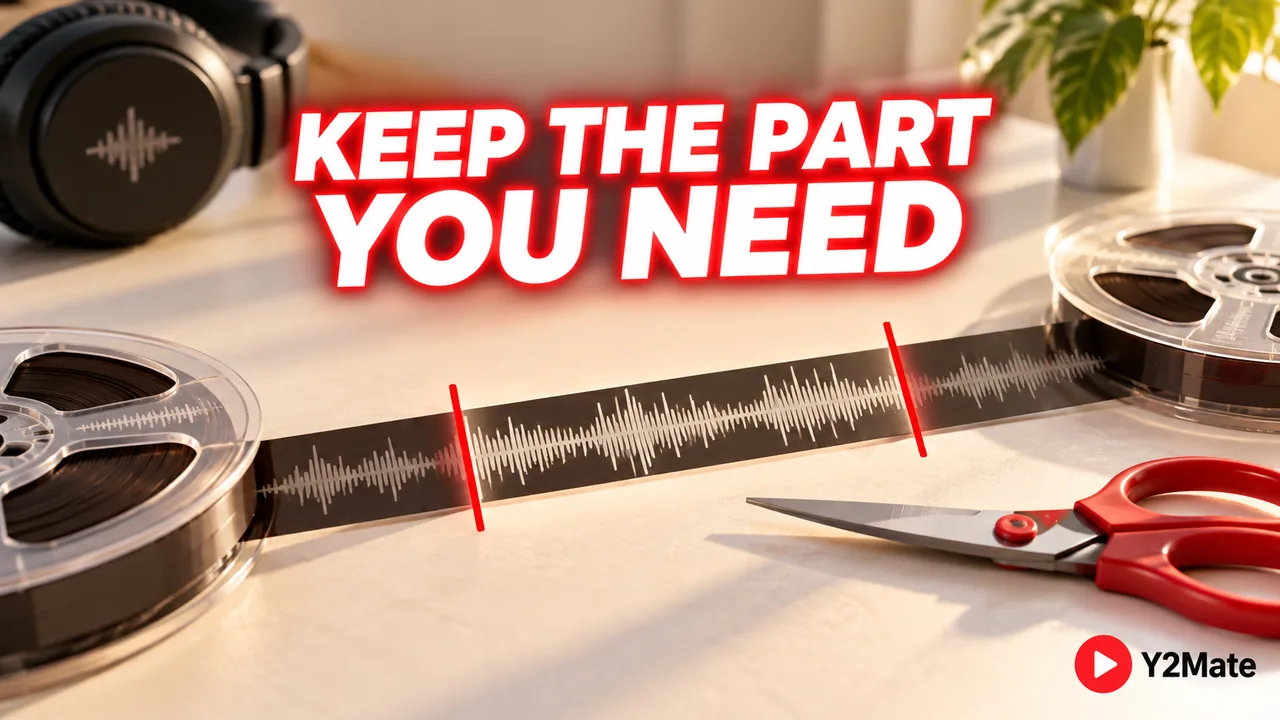
Open the working audio in Audacity and wait until it is ready for playback. For a straightforward first edit, work with a single recording rather than a crowded project containing unrelated tracks. Identify the passage in the waveform, then drag a selection around the part you want to retain. Use playback to confirm the boundaries; the visible waveform alone cannot tell you where a sentence becomes understandable.
Audacity's Trim Audio command keeps the selected part of a clip and removes the surrounding audio from that clip's visible edit. It appears under Edit, Remove Special. Pay attention to other clips and tracks in the project because a trim is not a universal “make this whole project one excerpt” command. Undo is useful while editing, but keeping your original file is still the more dependable recovery plan.
Listen closely at both edges
Preview a few seconds around the beginning. Do you hear a complete consonant, a breath that belongs to the phrase, or an unexpected click? Then listen to the end. A word cut before its final sound can feel unfinished even when the waveform looks neatly divided. Move the boundary slightly if needed and listen again at a comfortable level.
Do not try to disguise every problem by shortening the clip further. Sometimes leaving a little surrounding silence produces the cleaner, more natural excerpt. Abrupt waveform changes can produce clicks, and the best boundary for a spoken sentence may not be the visually smallest gap. The practical test is whether the transition sounds intentional.
If the result seems too quiet, finish choosing the excerpt first. Loudness changes introduce a separate decision, covered in understanding MP3 volume and normalization. Keeping these tasks separate makes it easier to hear which edit improved the recording and which one created a new problem.
Export audio, not just an editing project
Saving an Audacity project preserves editing work; exporting creates an audio file for ordinary playback. Choose an appropriate export format and destination, then give the excerpt a clear name that distinguishes it from the full recording. Check the export selection so you do not accidentally save a different range or additional tracks.
Exporting to MP3 can involve another lossy encoding step. A higher bitrate does not recreate detail already absent from the source, and repeatedly exporting an existing MP3 is not a quality-improvement method. Keep your working project if you expect more edits, and create a fresh final export from that work instead of editing yesterday's export repeatedly. Our explanation of source quality and 320 kbps covers that distinction.
Check the file you will actually use
Close the editing preview and open the exported audio in your normal player. Confirm the filename, duration, beginning, and ending. Listen through the complete excerpt once, not just the first second. If it will be used on a phone, transfer the file and repeat the check there before relying on it.
Keep the original, editing project, and final excerpt distinguishable until the task is finished. If you need a different source recording, return to the YouTube to MP3 converter and check the available result. Editing can select part of a recording, but it cannot substitute a missing performance, correct the wrong source, or grant permission to redistribute it.